SDG 15 · Life on Land · Project 3 · Digital twin
Planning to plant for climate change
Innovate digital sensing for regenerative agriculture practice.
We are developing our sensor technology to help regenerative agriculture. Our sensor is made to be affordable, and we are developing its robustness for field applications.
Our aim is sensor technology paired with biodiversity knowledge and market value propositions to deliver adaptive climate-to-market plantings: biodiversity planted for food and medicine that nourishes our mind-body connection.
We are committed to doing this transparently, and with evidence.
How the Sensor Works
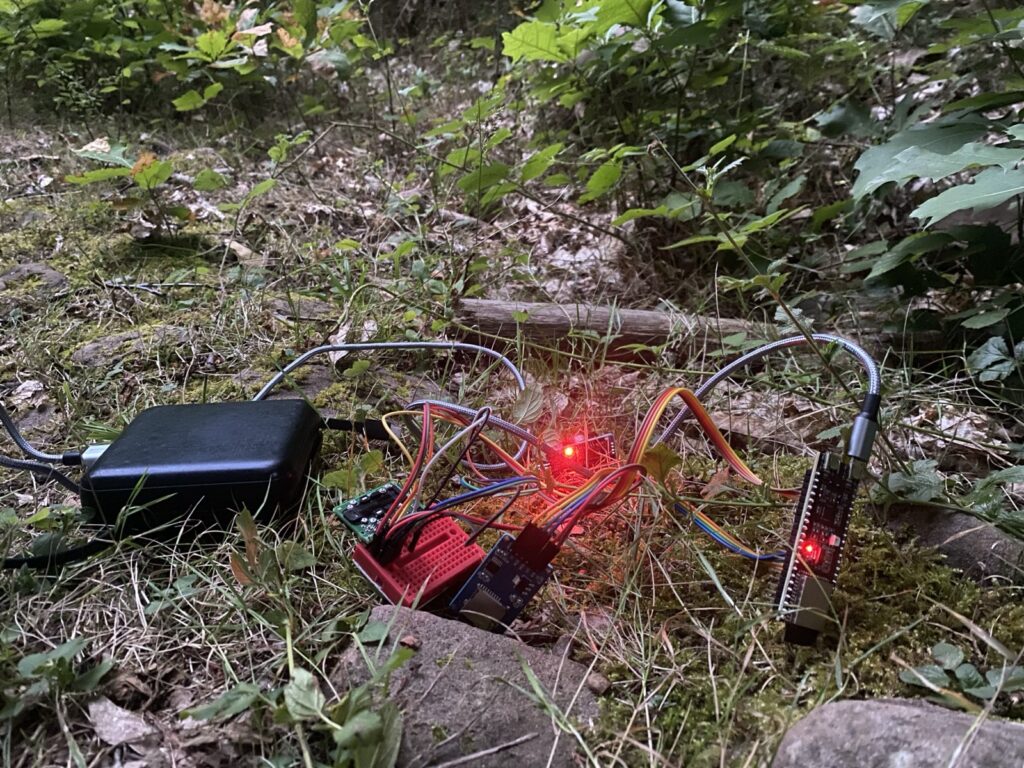
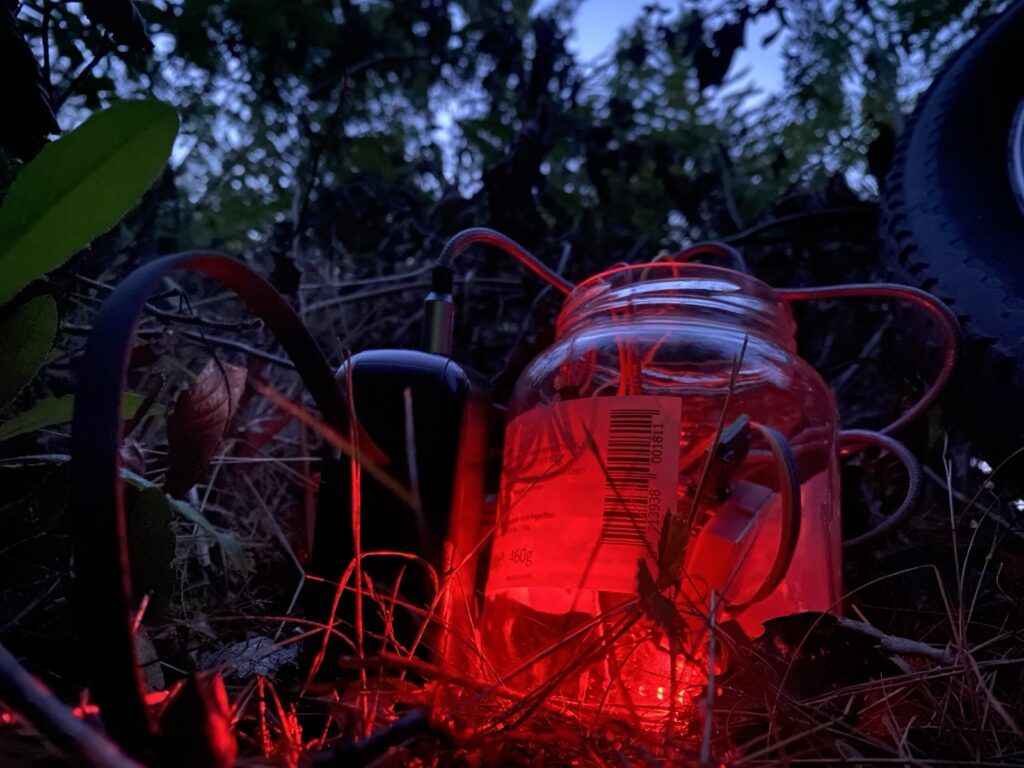
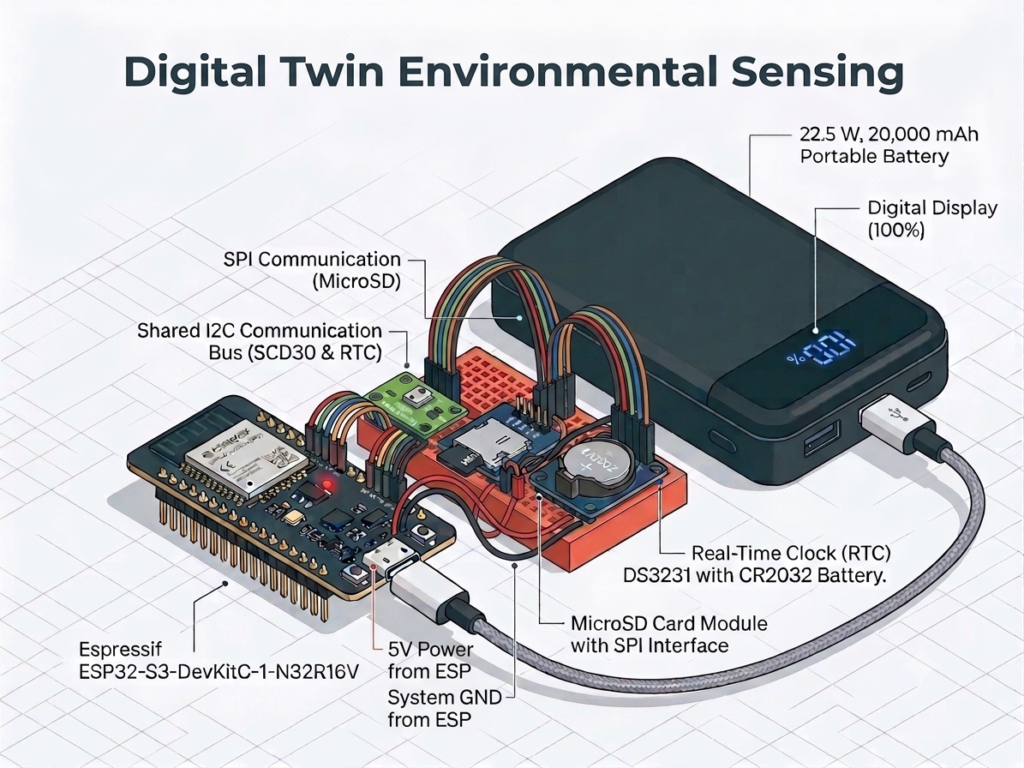
We are experimenting with the Sensirion SCD30 and ESP32-S3 development board. When connected to a 20,000 mAh portable lithium battery run on deep sleep cycles it can read over weeks to months without a charge. When paired with a solar panel this time period can be extended.
Data is logged onto an SD card, but can also be transmitted using an LTE mobile internet connection to a cloud database. The sensor logs temperature, CO2 and humidity data.
What We Measure
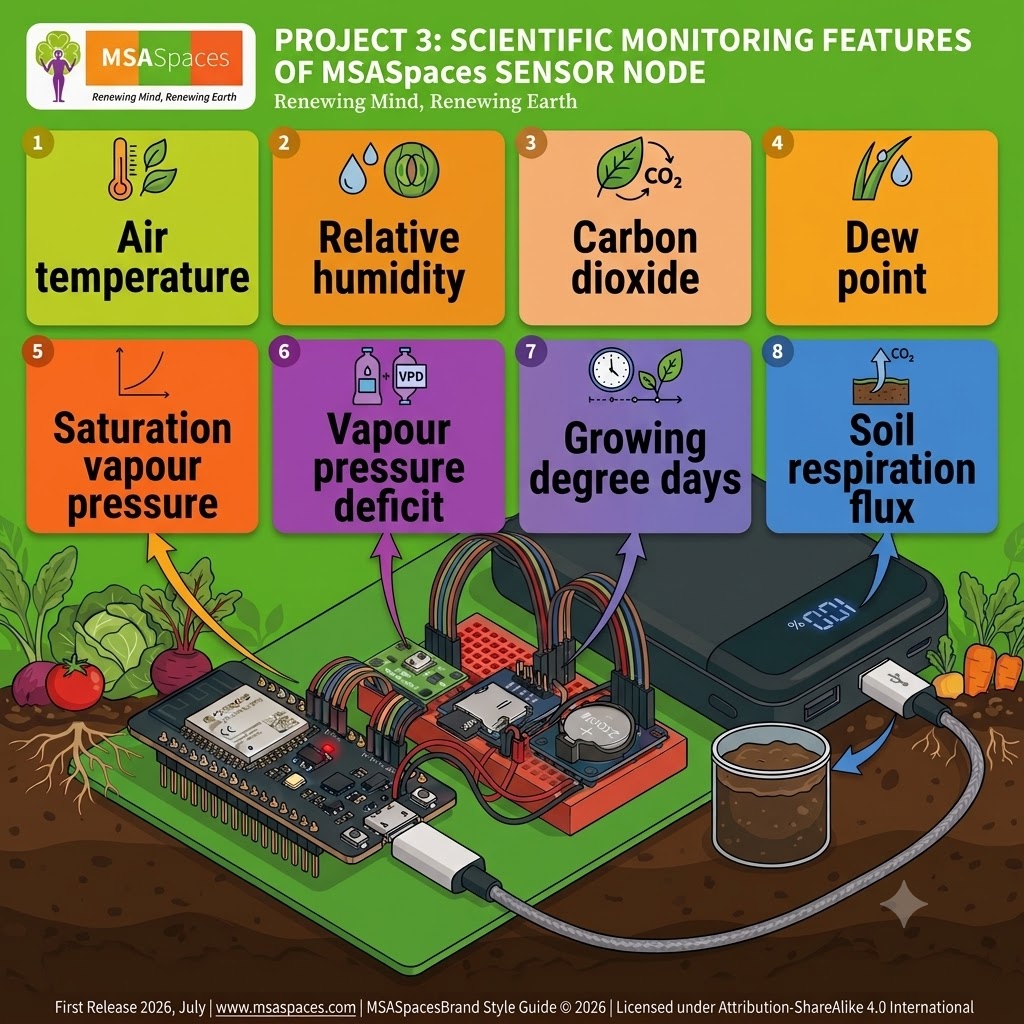
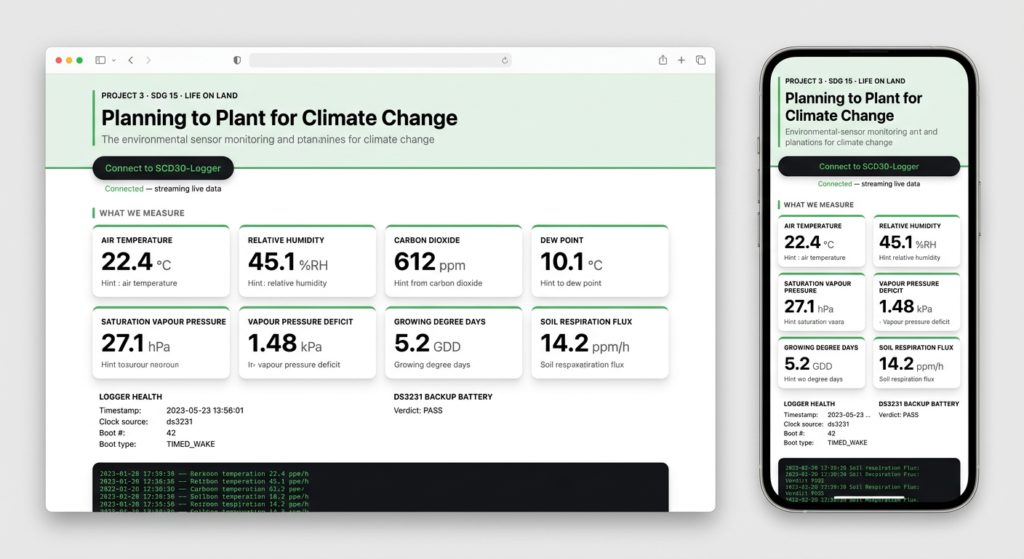
With only three measurements outputs we can understand our environment using 8 key grow parameters:
Tap a parameter to open its diagram. The sensor measures three things directly: air temperature, relative humidity and carbon dioxide. The rest are worked out from them.
Air temperature
Influences the rhythms of the plant – how fast it grows, when it flowers, when it dies.
Where the number comes from: Measured directly by the sensor.
Relative humidity
How full of water the surrounding air already is – the damper it gets, the longer leaves stay wet and the easier fungal disease could take hold.
Where the number comes from: Measured directly by the sensor.
Carbon dioxide
Traces the breathing of the plant’s environment – taken in by leaves, given back out by roots and soil life.
Where the number comes from: Measured directly by the sensor.
Dew point
The temperature at which the air around the plant can hold no more water – cool past it and moisture settles onto the leaf.
Where the number comes from: Calculated from air temperature and relative humidity.
Saturation vapour pressure
The ceiling on how much water the surrounding air could hold at that warmth.
Where the number comes from: Calculated from air temperature.
Vapour pressure deficit
How thirsty the air around the plant is – how hard it has to work to hold onto its own water.
Where the number comes from: Calculated from saturation vapour pressure and relative humidity: the water the air could hold, minus what it holds.
Growing degree days
The warmth a plant has felt, added up day by day – its own calendar for when to flower or fruit.
Where the number comes from: Calculated from daily air temperatures: each day adds the warmth above a base temperature for that crop.
Soil respiration flux
The soil beneath the plant, breathing out – roots and microbes at work together.
Where the number comes from: Needs a method around the sensor, explained below.
Measuring soil respiration flux
A flux is a rate of flow through an area: here, how much carbon dioxide leaves each square metre of soil each second. A single sensor in the open air measures a concentration, the amount of CO2 around it at one moment. That number rises and falls with soil breathing, but also with wind, with plants taking in CO2 by day, and with the air settling at night. Turning a concentration into a flux needs a method that ties the reading to an area and a time. There are several.
Closed chamber
A collar and lid trap the air over a known patch of soil. The rise in CO2 over a few minutes gives the flux directly. It is the simplest and cheapest method, and it has been tested with low-cost sensors including the SCD30.
Soil gradient
Sensors buried at two or three depths measure how CO2 falls from deep soil to the surface. With soil temperature, moisture and texture, Fick’s law of diffusion turns that slope into a continuous flux, with no lid. Its main uncertainty is how easily gas moves through the soil.
Open air
Above the ground, flux can be estimated from the CO2 difference between two heights plus wind measurements, or from how much CO2 builds up near the ground on still nights. Both need tiny differences measured accurately, so they suit research-grade instruments better than low-cost ones.
Soil air can hold far more CO2 than open air, beyond the range where the SCD30’s accuracy is specified, and buried sensors must be kept dry. So the deeper probes in a gradient need a sensor rated for soil air.
Our plan: we report what the sensor measures today as near-surface CO2 concentration, an indicator of soil breathing rather than a flux. Next we add a low-cost chamber, then a buried gradient probe, so the network can report a true flux. Both will be checked against a reference instrument before any flux figure is published.
Further reading: Maier, M., & Schack-Kirchner, H. (2014). Using the gradient method to determine soil gas flux: A review. Agricultural and Forest Meteorology, 192–193, 78–95.
Our Existing Development Platform
We are connecting the sensor to via Bluetooth to phone and desktop so all parameters are easily read.
Our Future Platform
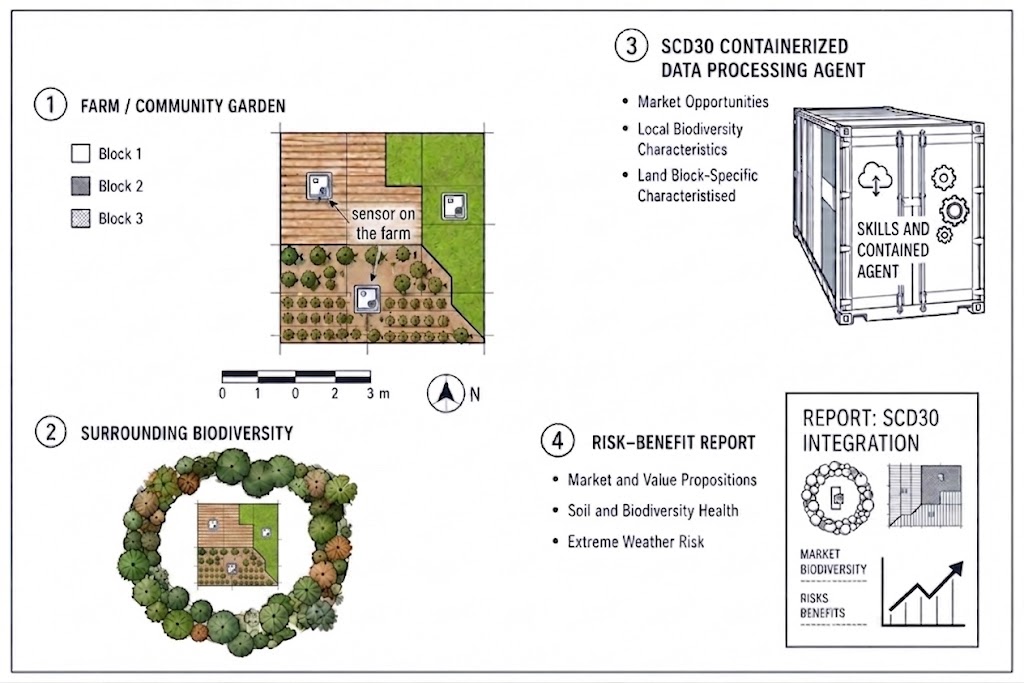
We aim to predict to create risk-and-benefit planting reports using local biodiversity planting, market opportunities and extreme weather risk for farming communities transitioning to regenerative agriculture.
Collaborate With Us ✌🏾🙏💪
We have an Ollama API which can be used for development and a GitHub. We also have sensor data available to start the project. But you don’t have to be technically minded to help. We welcome connections from interested peoples of all skill levels and a love for learning.
We publish under share-alike and copy left licenses meaning you are welcome to use our resources to start your own social enterprise, and we hope you can help us develop adaptive, forward-thinking roles for community members.
Get Involved With the Code
The firmware for the SCD30 data logger is open source. Fork it, open an issue, or send us a pull request.
Have a Garden Site?
An allotment, a verge, a roof, a field corner, a piece of ground nobody has known what to do with since something was knocked down on it. If you don’t have funding or a research background, no problem ! 😌 We can get you involved in the project. We can work out a way to get a sensor out with someone willing to look after it, and a willingness to write down what happens.